Memory Is the Future

Memory
Memory is the mental faculty that allows living beings to encode, store, retain, and later retrieve information and past experiences. It serves as the foundation for learning, personal identity, and daily functioning.
Humans are blessed with the most phenomenal skill of memory. Maybe that is what makes us the most evolved form of animal. We always say that everything heals with time, but conceptually, it is just memory that dilutes over time as new memories overwrite the old ones in the most complex computer in the universe the human brain.
Memory in humans follows a vague, distorted pattern of images and visuals. Maybe that’s why we can’t properly recollect our childhood days, when we used to shit in diapers and pee on our mom’s hand while she held us warmly to her chest.\
Data
As humans evolve, so does our pursuit of technological eureka moments. First came electricity, then computers, and now AI. The information that was fed into and received from computers came to be termed data. But at an ideological level, it is simply a digital form of memory for computers and machines.
Data has paved the way for rapid human innovation in technology. The nature and structure of data always play an important role in the way it is processed. With the growing age of intelligence and the abundance of information being mass-produced, the most important part will eventually depend on the process followed in obtaining that information, its value for consumption, and the effort needed to process it.
Organisations in business, banking, healthcare, and manufacturing are sitting on billions of pieces of data collected over decades and centuries. Following conventional ways of implementing decision-making for modern problems will cost billions in spending and years of consistent technical and manual labour.
Semantic
Semantics is the study of meaning in language. It looks at how words, phrases, and sentences make sense and how we understand them.
Ontology
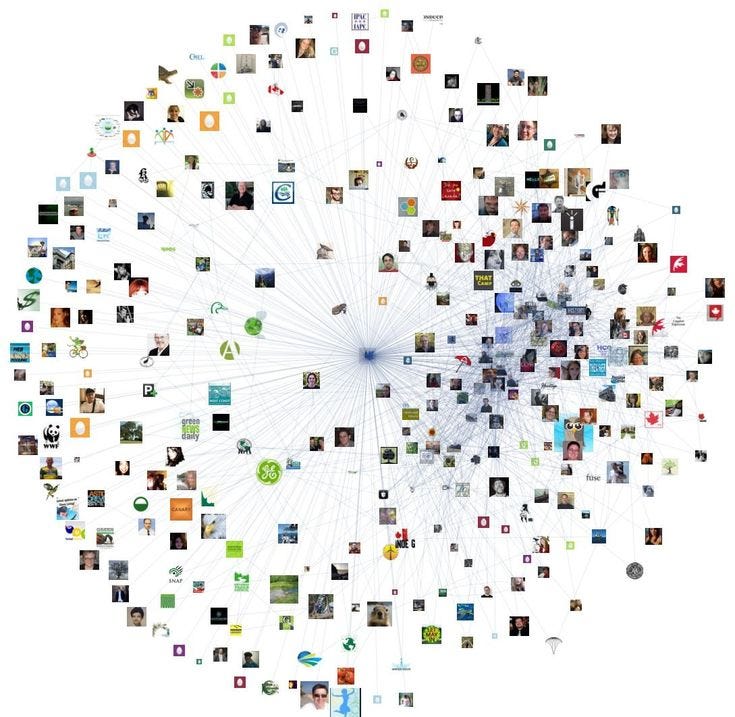
Ontology is the philosophical study of being, existence, and reality. It asks what kinds of things exist in the universe and how they relate to each other. The term also has a major definition in computer and information science, where it means a formal map of concepts and categories within a specific subject area.
Semantic Ontology
Semantic ontology is advancing at an astronomical pace in its application across new-age areas of innovation, including healthcare, manufacturing, and banking.
Healthcare seems to be experiencing a wave of AI-centric achievements, with rapid developments in drug discovery, machine-data management, customised treatment, personalised care, and the building of centralised treatment systems for healthcare and hospitals.
Manufacturing, the century-old industry that has shaped human civilization, is also being transformed by this technology.
Manufacturing and Innovation
Manufacturing has played a pivotal role in human social and economic evolution while continuously experiencing waves of innovation.
For years, and even until now, the majority of the manufacturing industry has been dependent on manual intervention and decision-making. Semantic ontology-enabled smart systems can save millions and billions for companies by reducing expenses, cutting material wastage, and accelerating production lines.
Banking
Banking is the backbone of everyone.
The capitalist economy is also getting levelled up with semantic ontology, with semantic ontology gradually making its way into decision-making layers.
Banks can critically save tons of time and effort in processes like credit and loan approvals, capital allocation, and customer data management. We are moving towards a centralised technology layer, with human and technological decision layers working together within the banking framework.
New Wave of Memory
Memory, as mentioned, is the most beautiful and powerful gift to mankind.
With technology and artificial intelligence exploring new horizons, the way we humans interact with machines is changing. Within a few months, we may see machines building their own contextual layer of memory, which can pave the way for advanced intelligence.
We are in the last phase of simply feeding data to machines to train them so that we can use them. The days when machinery adapts to humans based on their past memory of interaction are here.
Future
The future of technology seems to be adaptive beyond just innovation.
Making humans adapt to technology will be a generational leap for mankind.